

Free Claude Code Setup: Providers, Costs and Limits

Free Claude Code routes coding agents to other providers. Follow the setup path, check free-tier quotas and understand fallback models and billing.
Independent analysis, benchmarks, and field intelligence on AI models, chips, computing, and defence systems.
Free Claude Code routes coding agents to other providers. Follow the setup path, check free-tier quotas and understand fallback models and billing.
Elorian Glimpse costs $0.60 input and $3 output per million tokens. Check API access, visual reasoning benchmarks and the cost of longer answers.
Perplexity Decider v1.2 costs $0.02 per million input tokens. Learn when to group questions, how confidence works and what local deployment requires.
Mercury 3 launches at $0.10 input and $0.35 output per million tokens. Check reasoning defaults, diffusion streaming and the limits of its speed claim.
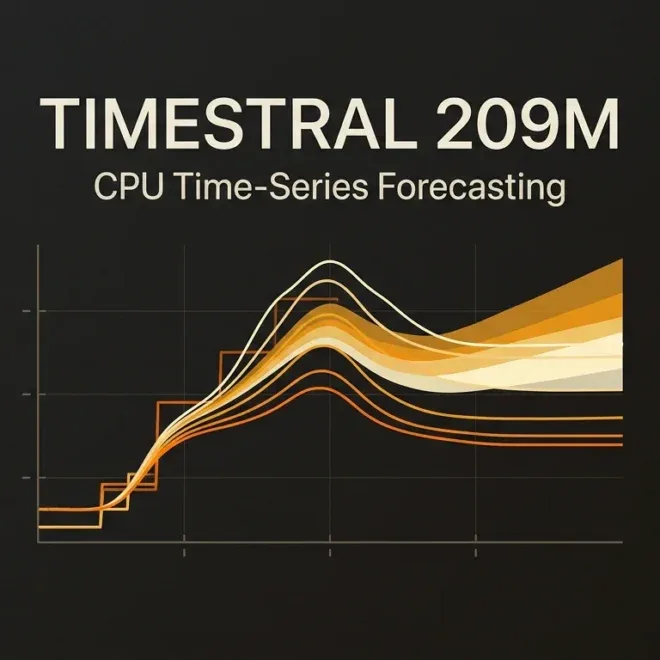
Mistral Timestral runs 209M forecasts in 140ms on standard CPUs. Here is why missing covariate NaNs and research licenses break enterprise pipelines.
DeepSeek Flash 1017 keeps API prices unchanged and raises reported coding scores. Check model aliases, peak rates and benchmark caveats before upgrading.

Fish Audio Drama 3 needs 48 GB VRAM on the documented FP8 path. Compare int4 weight savings, runtime API limits and local setup before downloading.

Install VoiceStudio on Windows, Apple Silicon or Linux. Check Electron packages, 10 GB disk guidance, engines and local API settings before you start.

Bonsai 2 9B’s default GGUF is 2.42GB; adding its Q8 vision projector brings downloads to 3.04GB. Match PQ2, PTQ or Q2 files to the correct llama.cpp build.
NVIDIA estimates 23.83GB for text-only Nemotron 3.5 Bolt, while its GGUF recipes use larger budgets. Check vision, context and draft-model requirements.